The E-Scooter Epidemic: How We Started “Renting” Humans
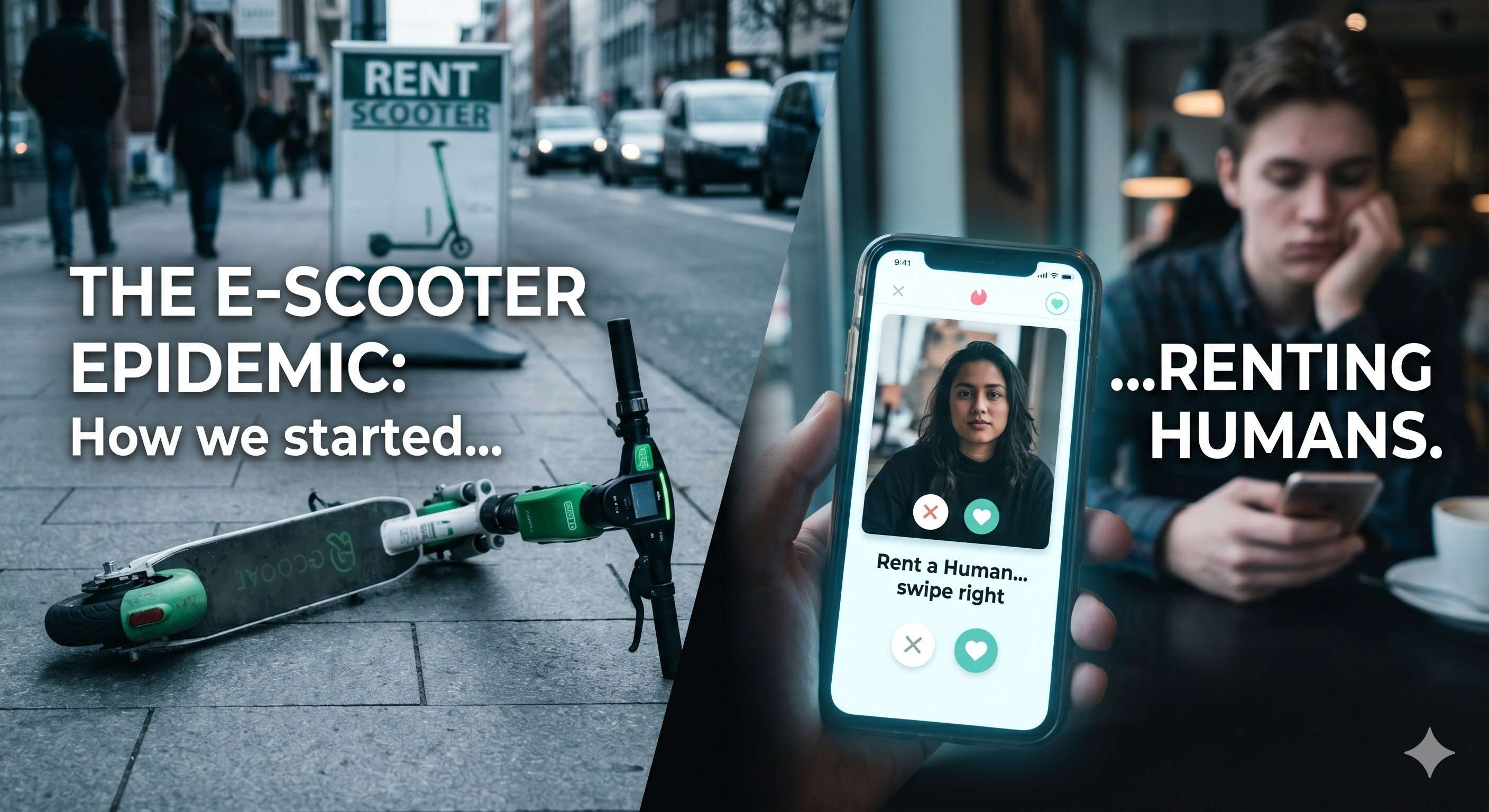
About a decade ago, a brilliant idea revolutionized how we navigate our cities: the sharing economy. Apps popped up allowing us to rent electric scooters, bicycles, and even cars by the minute.
The premise was undeniable. Why buy a product, struggle to find storage in a cramped apartment, and pay for expensive maintenance when you could just borrow one? If an e-scooter’s battery died or a spare part went missing, it wasn’t your problem. You didn’t have to worry about the fire hazards of charging it unattended.
Instead, you simply opened an app, tapped a pin on a map, hopped on the nearest scooter, and rode it to your destination. When you were done, you left it on the sidewalk and walked away. No strings attached. No maintenance required.
It was an environmentally friendly, cost-effective, and highly convenient system. But things took a dark turn when we took this exact same business model and applied it to human beings.
The Rise of “Human Rentals”
Instead of doing the hard, messy work of building genuine human connections, friendships, and relationships, society decided it was easier to rent each other.
Enter the modern dating app era: Tinder, Bumble, and the swipe-right culture.
Just like locating a scooter on a digital map, you can open an app and scroll through a catalog of human faces. You swipe right on the ones that catch your eye, hoping for a match. The goal? To hook up, use someone for the night, and metaphorically discard them on the sidewalk the next morning.
We have stripped away everything that makes a relationship real. By treating people like temporary commodities, we successfully bypass the “maintenance” of human connection:
- No responsibility to manage expectations.
- No need to reconcile after difficult arguments.
- No sacrificing your time to care for a partner when they are sick, stressed, or going through a painful time.
We only want to experience people when they are in their absolute best mood and prime condition. Once the ride is over, we close the app. We don’t care what happens to them next.
The Fast Food Analogy: A Feast That Starves You
We call it “hookup culture,” and the harsh reality is that human beings simply aren’t built for it.
Think about fast food. When you bite into a cheap, highly processed burger, it feels amazing in the moment. It is scientifically engineered to trigger every taste bud on your tongue. But deep down, you know your body isn’t built to survive on it. If you eat fast food every day, you invite a host of long-term problems—obesity, diabetes, and chronic illness.
Modern swipe culture is the fast food of human connection.
Dating apps are designed to feel incredibly rewarding. They trigger a massive dopamine hit—the “taste buds” of your brain—every time you get a new match. You get the thrill of reading random profiles, accessing intimate details, and, if you’re lucky, having no-strings-attached sex.
Like a fast-food diet that eventually destroys your body, the cheap thrill of hookup culture is slowly starving our souls.
It’s Time to Reverse the Process
We are trading profound, enduring love for cheap, temporary speed-freaking. We have reduced the complex, beautiful, and sometimes painful reality of human relationships into a disposable transaction.
This transactional approach to intimacy is unnatural. It damages our empathy, our self-worth, and our capacity for real love.
It is time to log off, delete the catalog, and stop treating human beings like rental scooters. We need to remember how to build, maintain, and cherish real relationships—because true connection is the one thing we can’t afford to throw away.